News
Nobel Prize in Chemistry 2026
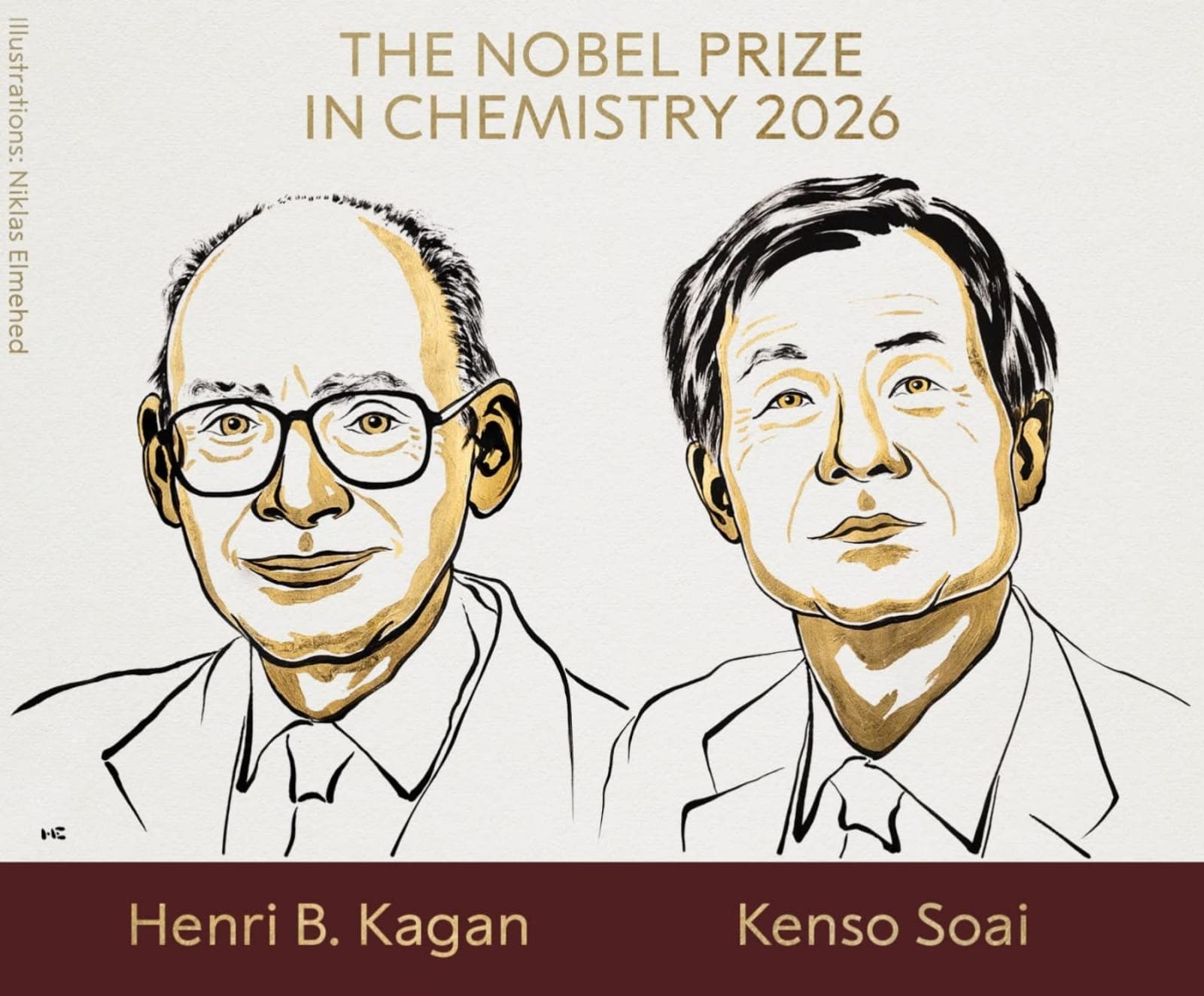
The Nobel Prize 2026 in Chemistry has been awarded jointly to French scientist Henri B. Kagan and Japanese scientist Kenso Soai for their discovery of non-linear effects and autocatalysis in asymmetric organic synthesis.
Many organic molecules exist as mirror images of each other, called enantiomers. However, only one of them is present in living organisms, and has specific biological properties, this is called homochirality. Kagan and Soai's work helped explain how chemical reactions can amplify a tiny initial imbalance and produce predominantly one molecular handedness.
Henri Kagan took first decisive step in discovery of a new way of manipulating chemical reactions, this allowed him to create a greater excess of one of the mirror images than had priviously thought possible. Kenso Soai describes first ever chemical reaction that had the potential to be homochiral. He presented a reaction in which only one of the two possible mirror images was formed.
These works are very important particularly in pharmaceutical industries. Production of only one of the mirror images can reduce the required dose and also reduce the risks of side effects.
